A fixed-rate mortgage keeps the interest rate unchanged for the life of the loan, giving borrowers predictable principal and interest payments from month to month. That stability can make budgeting easier and protect borrowers from future increases in market interest rates.
With more than 20 years of mortgage industry experience, I help homebuyers and homeowners throughout the Lehigh Valley and Poconos understand fixed-rate mortgage options, compare loan terms, and evaluate whether a fixed-rate structure supports their home purchase or refinancing goals.
My primary Pennsylvania market focus includes communities throughout Lehigh, Northampton, and Monroe counties, including Allentown, Bethlehem, Easton, Whitehall, Center Valley, Coopersburg, Stroudsburg, East Stroudsburg, Mount Pocono, and surrounding areas.
I’m also licensed and have mortgage experience across Pennsylvania, New Jersey, Delaware, Florida, Maryland, Virginia, and Kansas.
Whether you’re purchasing your first home, moving into your next property, or refinancing an existing mortgage, my goal is to help you understand how fixed-rate financing works, what affects your payment, and how different loan terms may influence both your monthly budget and long-term borrowing costs.
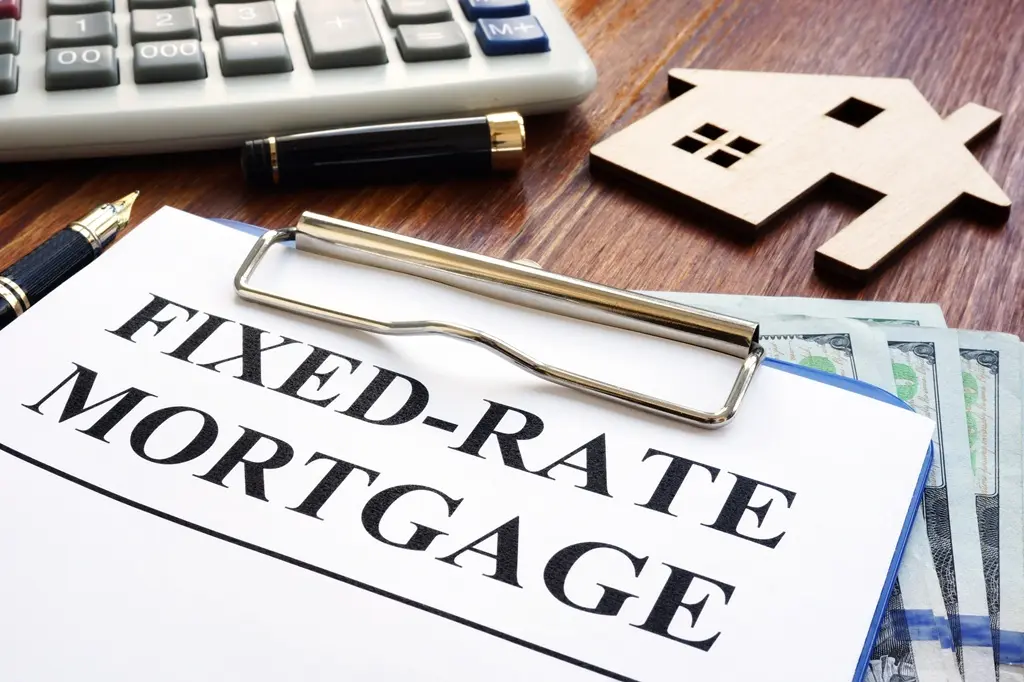
A fixed-rate mortgage is a home loan with an interest rate that remains the same for the entire loan term. Because the interest rate does not adjust with market conditions, the scheduled principal and interest payment remains consistent throughout the mortgage.
It is important to distinguish principal and interest from your total monthly mortgage payment.
Property taxes, homeowners insurance, mortgage insurance when applicable, and other escrow-related expenses may change over time even though the mortgage interest rate itself remains fixed.
Fixed-rate mortgages can be available through several mortgage programs, including:
The fixed rate describes how the interest rate behaves. The underlying mortgage program determines many of the qualification, down payment, mortgage insurance, property, and loan-limit requirements.
Fixed-rate financing may provide several advantages depending on your financial goals and how long you expect to keep the mortgage.
One potential tradeoff is that an Adjustable-Rate Mortgage (ARM) may offer a lower initial rate in some market conditions. The right choice depends on the actual loan options available and how long you expect to keep the mortgage.
A fixed-rate mortgage may be worth considering if you:
A fixed-rate mortgage is not automatically the best option for every borrower.
The decision should consider your expected time in the home, available cash, monthly-payment goals, current mortgage options, loan term, long-term financial plans, and comfort with the possibility of future interest-rate changes.
A fixed-rate mortgage does not have one universal set of qualification requirements.
“Fixed rate” describes how the interest rate behaves. Qualification depends on the mortgage program underneath the loan.
For example, a borrower may have a:
Each program has its own requirements involving credit, down payment, income, debt obligations, mortgage insurance or guarantee fees, property eligibility, occupancy, and loan limits.
That means borrowers should not rely on one generic credit score, down payment, or debt-to-income ratio to determine whether they qualify for a fixed-rate mortgage.
I review your complete financial profile and available mortgage programs to help you understand which fixed-rate options may fit your circumstances.
The mortgage term affects both the required monthly principal and interest payment and how quickly the mortgage balance is repaid.
A 30-year fixed-rate mortgage spreads repayment over a longer period.
Compared with a similar shorter-term mortgage, this generally results in a lower required monthly principal and interest payment, which can provide more room in the monthly budget.
The tradeoff is that the loan balance is repaid more slowly and the borrower will generally pay more interest over the full life of the mortgage than with a shorter repayment term.
A 15-year fixed-rate mortgage repays the mortgage balance more quickly.
Monthly principal and interest payments are generally higher than on a comparable 30-year mortgage, but borrowers build equity faster and typically pay substantially less total interest over the life of the loan.
The higher required monthly payment makes it important to evaluate how a 15-year term fits your budget and other financial priorities.
Depending on the lender and mortgage program, shorter fixed-rate terms such as 10 and 20 years may also be available.
These options may appeal to borrowers who want to repay their mortgage faster than with a traditional 30-year loan while comparing the resulting monthly payment with other available term options.
Qualified borrowers financing an amount above the conforming loan limit applicable to the property may also have access to fixed-rate Jumbo Loan options.
Terms, qualification requirements, reserves, down payment, and pricing depend on the specific jumbo program and borrower profile.
The primary difference between a fixed-rate mortgage and an Adjustable-Rate Mortgage (ARM) is what can happen to the interest rate after closing.
With a fixed-rate mortgage, the interest rate remains unchanged throughout the loan term.
With an ARM, the interest rate is typically fixed for an initial period and may then adjust according to the terms of the mortgage. Future adjustments can depend on the loan’s index, margin, adjustment schedule, and rate caps.
If you are considering an ARM, it is important to understand how and when the interest rate can adjust and how high the rate and payment could potentially increase.
I help borrowers compare both structures based on their actual financial goals, timeline, and available mortgage options rather than assuming one rate structure is always better.
Homeowners may consider refinancing into a fixed-rate mortgage when their existing financing no longer fits their financial goals.
Potential reasons may include:
Refinancing is not automatically beneficial simply because a different interest rate is available.
Closing costs, the new mortgage term, remaining loan balance, monthly-payment change, expected time in the home, and total long-term borrowing costs should all be considered.
I help homeowners compare the existing mortgage with available refinance options so they can better understand the potential benefits, costs, and tradeoffs before making a decision.
Choosing a fixed-rate mortgage involves more than deciding that you want a predictable payment.
The mortgage program, loan term, interest rate, closing costs, down payment, mortgage insurance, monthly budget, and long-term financial goals can all influence the decision.
I bring:
My goal is to help you understand not simply how a fixed-rate mortgage works, but whether the mortgage program and term support your broader homeownership and financial goals.
Mortgage pre-approval can help you understand the fixed-rate financing options that may be available based on your financial circumstances.
I can help you compare mortgage programs, loan terms, estimated principal and interest payments, and fixed-rate versus adjustable-rate structures so you have clearer information before making an offer or refinancing an existing home.
If you’re purchasing or refinancing in the Lehigh Valley, Poconos, or another state where I’m licensed, contact me to discuss your fixed-rate mortgage options.
A fixed-rate mortgage is a home loan with an interest rate that remains unchanged for the entire loan term. Because the interest rate stays fixed, the scheduled principal and interest payment remains predictable. Your total monthly payment can still change if costs such as property taxes, homeowners insurance, or mortgage insurance change.
The scheduled principal and interest payment on a typical fixed-rate mortgage remains consistent. However, your total monthly mortgage payment may change if property taxes, homeowners insurance, mortgage insurance, or other escrowed expenses increase or decrease. A fixed interest rate therefore does not necessarily mean every part of your total housing payment will remain unchanged.
A 15-year mortgage repays the loan faster and generally requires a higher monthly principal and interest payment than a comparable 30-year mortgage. In return, borrowers typically build equity more quickly and pay less total interest. A 30-year term generally provides a lower required monthly payment but repays the balance more slowly.
Neither is automatically better. A fixed-rate mortgage may appeal to borrowers who value long-term payment predictability. An ARM may be worth considering when its initial rate and adjustment structure fit the borrower’s plans. The decision should consider your timeline, payment goals, rate options, adjustment risk, and ability to manage future payment changes.
Yes. Homeowners may refinance an existing fixed-rate mortgage when they want to change the interest rate, loan term, mortgage program, or other financing structure. Whether refinancing makes financial sense depends on the new loan terms, closing costs, remaining mortgage balance, expected time in the home, and overall short-term and long-term costs.
Potentially. Refinancing an adjustable-rate mortgage into a fixed-rate mortgage can eliminate future rate adjustments and provide more predictable principal and interest payments. The refinance requires a new mortgage, so qualification, interest rate, closing costs, property value, loan balance, and the expected length of time you will keep the new loan should be evaluated.
There is no single set of requirements because fixed rate describes the interest structure rather than one mortgage program. Qualification depends on whether the loan is Conventional, FHA, VA, USDA, Jumbo, or another available program, along with factors such as credit, income, debts, assets, property, occupancy, and loan amount.