A debt-consolidation refinance allows qualified homeowners to use available home equity to pay off certain debts such as credit cards, personal loans, auto loans, or other financial obligations as part of a mortgage refinance.
In many cases, this strategy uses a Cash-Out Refinance to replace the existing mortgage with a larger mortgage and use a portion of the proceeds to pay other debts.
With more than 20 years of mortgage industry experience, I help homeowners throughout the Lehigh Valley and Poconos evaluate their existing debts, available home equity, mortgage options, monthly cash flow, and potential long-term costs before deciding whether debt consolidation through refinancing makes sense.
My primary Pennsylvania market focus includes homeowners throughout Lehigh, Northampton, and Monroe counties, including Allentown, Bethlehem, Easton, Whitehall, Center Valley, Coopersburg, Stroudsburg, East Stroudsburg, Mount Pocono, and surrounding communities.
I’m also licensed and have mortgage experience across Pennsylvania, New Jersey, Delaware, Florida, Maryland, Virginia, and Kansas.
Debt consolidation can simplify monthly obligations and potentially reduce the amount you pay each month, but it also moves debt into a mortgage secured by your home. A lower monthly payment does not necessarily mean a lower total cost, especially when debt is repaid over a longer period.
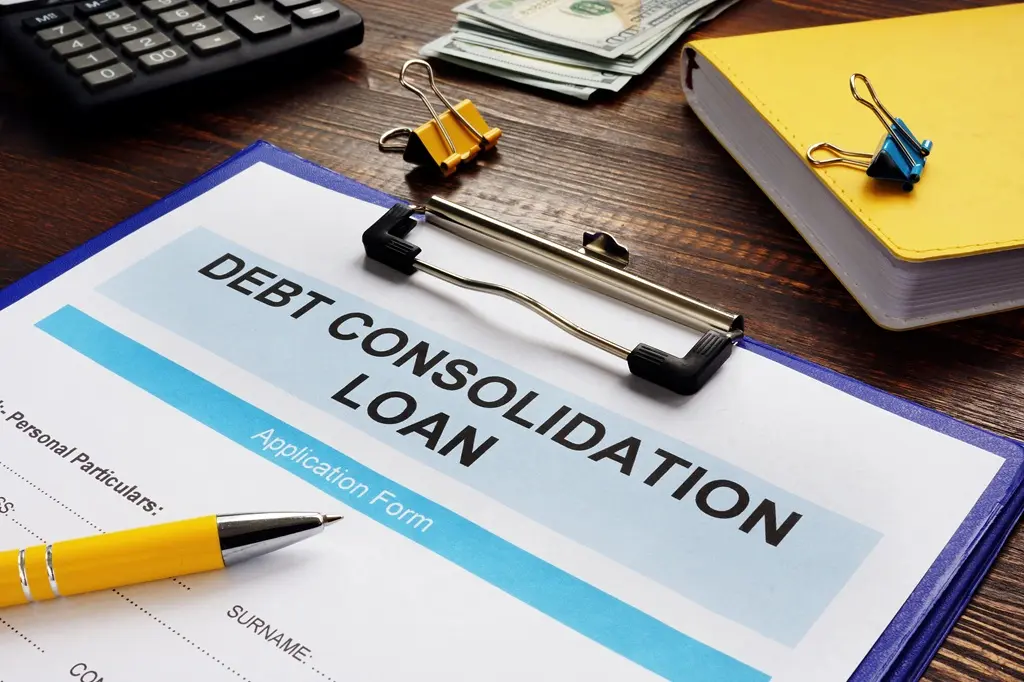
A debt-consolidation refinance is a mortgage strategy that uses available home equity to pay off other debts.
The existing mortgage is generally replaced with a new, larger mortgage. A portion of the additional proceeds can then be used to pay eligible debts such as:
After those debts are paid, the homeowner has the new mortgage payment rather than continuing to make each of the individual payments that were consolidated.
This can simplify monthly finances and may improve cash flow depending on the new mortgage payment and the debts being paid off.
However, the debts have not disappeared. They have been moved into a mortgage secured by the home and may be repaid over a much longer period.
Depending on your financial situation, a debt-consolidation refinance may provide several potential benefits:
These potential benefits should be weighed against closing costs, the new mortgage rate, the amount of home equity used, the repayment period, and the total cost of the new loan.
A debt-consolidation refinance may be worth evaluating if you:
Debt consolidation is not automatically the best strategy for every homeowner.
I help you evaluate not only whether a refinance can reduce monthly obligations, but also what happens to your mortgage balance, equity, repayment period, interest costs, and long-term financial flexibility.
Debt-consolidation refinance requirements generally depend on the cash-out refinance program used to access the home equity.
Requirements can vary based on the mortgage program, property, occupancy, loan amount, credit profile, income, debts, equity, and underwriting method.
You generally need sufficient home equity to pay off the existing mortgage, cover the amount of debt being consolidated, and remain within the applicable loan-to-value requirements.
The amount of equity available does not necessarily equal the amount you can withdraw.
Maximum financing depends on the mortgage program, property type, occupancy, property value, and borrower qualifications.
There is no single minimum credit score that applies to every debt-consolidation refinance.
Credit requirements depend on the mortgage program and complete loan profile.
Your credit history can also affect qualification, interest rate, mortgage pricing, and the amount of equity that may be available through the refinance.
The lender evaluates qualifying income and financial obligations to determine whether you can support the proposed mortgage payment.
Documentation requirements vary depending on employment, self-employment, retirement income, investment income, and other qualifying income sources.
Debt-to-income ratio compares qualifying monthly debt obligations with qualifying monthly income.
There is no universal DTI percentage that determines eligibility for every debt-consolidation refinance.
The mortgage program, underwriting findings, credit profile, income, assets, reserves, property, and other factors can all affect qualification.
The value of your home is an important part of determining available equity.
Depending on the mortgage program and underwriting findings, a traditional appraisal or another eligible property-valuation method may be used.
Some cash-out refinance programs include requirements involving how long you have owned the property or how long the mortgage being refinanced has been in place.
These requirements vary by program and may include exceptions.
I review the current requirements for the specific refinance rather than assuming one waiting period applies to every homeowner.
Debt consolidation should be evaluated from two different perspectives:
Those answers are not always the same.
Example Scenario
Assume a homeowner has:
If sufficient home equity and qualification allow the homeowner to pay that $40,000 through a cash-out refinance, the separate credit-card and auto-loan payments may be eliminated.
However, the new mortgage balance increases by the amount needed to consolidate the debt, along with any other amounts financed through the refinance.
The resulting monthly obligations may be lower depending on the new mortgage rate and term.
But if that $40,000 is repaid over a much longer mortgage term, the homeowner could potentially pay interest on the debt for many more years.
That is why I compare:
The goal is to understand the complete financial tradeoff rather than focusing only on the monthly payment.
Debt consolidation through home equity may be available using different refinance programs.
A Conventional Cash-Out Refinance may allow qualified homeowners to access home equity and use the proceeds to pay other financial obligations.
The amount available depends on property value, existing mortgage balance, occupancy, property type, equity, credit, income, and applicable Conventional guidelines.
Eligible homeowners may be able to use an FHA Cash-Out Refinance to access home equity.
FHA cash-out financing has specific requirements involving property occupancy, equity, credit, payment history, and underwriting.
Whether FHA financing makes sense should be evaluated against Conventional and other available refinance options.
Eligible Veterans, service members, and surviving spouses may be able to use a VA Cash-Out Refinance to access equity and pay off debt.
VA-backed cash-out refinancing may also allow an eligible borrower to refinance certain non-VA mortgages into VA financing.
VA eligibility, occupancy, entitlement, credit, income, property, funding-fee, and lender requirements apply.
Homeowners with larger mortgage balances or higher-value properties may have access to Jumbo Cash-Out Refinance options.
Jumbo guidelines can vary considerably by lender and may include different requirements for credit, reserves, equity, property valuation, and loan-to-value.
A mortgage refinance and a personal loan can both be used as part of a debt-consolidation strategy, but they work differently.
A personal loan is generally unsecured, while a mortgage refinance is secured by your home.
That distinction is important. If debt that was previously unsecured is moved into your mortgage, failure to make the mortgage payments can put the home at risk.
I help homeowners compare the payment, interest rate, repayment period, closing costs, collateral risk, and total borrowing cost rather than assuming one option is automatically better.
Using home equity to consolidate debt is an important financial decision because it affects more than the number of bills you pay each month.
It can change your mortgage balance, monthly payment, home equity, loan term, interest costs, and long-term financial flexibility.
I bring:
My goal is to help you understand whether debt consolidation through refinancing actually improves your financial position rather than simply moving debt from one place to another.
A debt-consolidation refinance evaluation can help you understand how much equity may be available, which debts could potentially be consolidated, what the proposed mortgage payment may look like, and how the strategy could affect your long-term costs.
I can help you review your existing mortgage, current debts, estimated property value, available equity, monthly obligations, and potential refinance options.
If you own a home in the Lehigh Valley, Poconos, or another state where I’m licensed, contact me to discuss whether using home equity for debt consolidation may fit your financial goals.
A debt-consolidation refinance generally uses a cash-out mortgage refinance to access available home equity and pay other debts. Your existing mortgage is replaced with a new mortgage, and part of the proceeds may be used to pay credit cards, personal loans, auto loans, or other eligible obligations.
Potentially, but savings are not guaranteed. Consolidation may reduce monthly obligations or replace certain higher-rate debts with mortgage financing. However, refinancing also involves closing costs, a new mortgage rate, and potentially a longer repayment period. A lower monthly payment can still result in higher total interest if the debt is repaid for many additional years. CFPB specifically cautions consumers about this distinction.
Requirements depend on the cash-out mortgage program. For an eligible Fannie Mae conventional one-unit principal-residence cash-out refinance, current guidelines allow up to 80% LTV. Fannie Mae also generally requires an existing first mortgage being paid off to be at least 12 months old and at least one borrower to have held title for six months, subject to exceptions.
Potentially. FHA offers cash-out refinance financing subject to FHA eligibility and underwriting requirements. Eligible VA borrowers may also use a VA-backed cash-out refinance, and VA specifically identifies paying off debt as a permitted reason to access home equity. Program, occupancy, credit, income, property, and lender requirements still apply.
There is no guaranteed credit-score result. Applying for the new mortgage generally involves a credit inquiry, which can have a small negative effect on credit scores. Paying down revolving balances may change the information used by scoring models, but future scores depend on the complete credit profile and how accounts are managed after consolidation.
The biggest difference is that unsecured debt can become debt secured by your home. You may also extend the repayment period, pay refinance closing costs, reduce available home equity, and potentially pay more overall even if the monthly payment decreases. If mortgage payments cannot be made, the home can ultimately be at risk.
A debt-consolidation refinance is a new mortgage transaction, so costs may include lender charges, appraisal or valuation expenses, title costs, recording charges, prepaid interest, escrow items, and program-specific fees. The Loan Estimate provides the proposed loan terms and estimated closing costs so the transaction can be evaluated before closing.
Not automatically. A cash-out refinance replaces your existing first mortgage. A HELOC generally allows revolving borrowing against home equity while leaving the first mortgage in place, and a personal loan generally does not use the home as collateral. The right comparison depends on rates, repayment periods, closing costs, cash needs, and risk.