FHA loans can provide an accessible path to homeownership for borrowers who may benefit from a lower down payment or more flexible credit guidelines. These mortgages are made by FHA-approved lenders and insured by the Federal Housing Administration (FHA), which is part of the U.S. Department of Housing and Urban Development (HUD).
With more than 20 years of mortgage industry experience, I help homebuyers throughout the Lehigh Valley and Poconos understand FHA loan requirements, evaluate potential costs, and compare FHA financing with other mortgage options based on their individual circumstances and long-term goals.
My primary Pennsylvania market focus includes communities throughout Lehigh, Northampton, and Monroe counties, including Allentown, Bethlehem, Easton, Whitehall, Center Valley, Coopersburg, Stroudsburg, East Stroudsburg, Mount Pocono, and surrounding areas. I’m also licensed and have mortgage experience across Pennsylvania, New Jersey, Delaware, Florida, Maryland, Virginia, and Kansas.
Whether you’re buying your first home or returning to the housing market, my goal is to help you understand how FHA financing works and whether it makes sense for your situation.
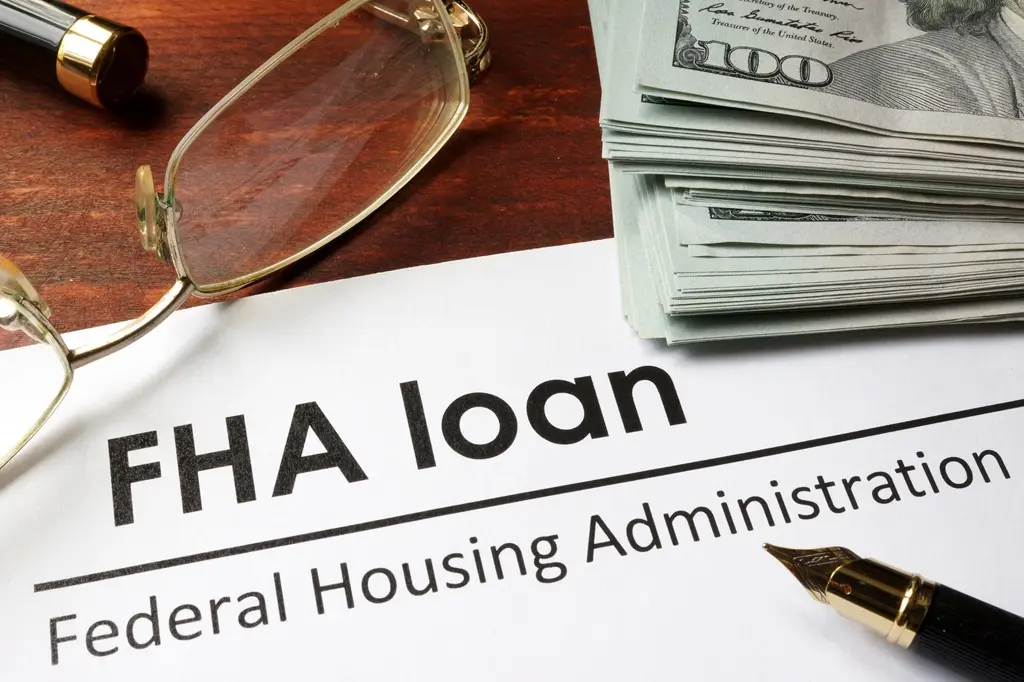
An FHA loan is a mortgage made by an FHA-approved lender and insured by the Federal Housing Administration. FHA does not lend the money directly. Instead, FHA mortgage insurance protects the lender against certain losses if the borrower defaults.
FHA loans are often associated with first-time homebuyers because of their low down payment option, but they are not limited to first-time buyers. Eligible repeat buyers may also use FHA financing when purchasing a qualifying primary residence.
For qualified borrowers, FHA financing may be worth considering when available savings, credit history, debt obligations, or other financial circumstances make a Conventional Loan less suitable.
Depending on your circumstances, FHA financing can offer several potential advantages:
The advantages of an FHA loan should always be considered alongside mortgage insurance, loan limits, property requirements, monthly costs, and other available financing options.
An FHA loan may be worth exploring if you:
FHA financing is not automatically the right mortgage for everyone. I review your credit profile, available funds, income, debts, property goals, and long-term plans to help you understand how FHA compares with other mortgage options available to you.
For buyers throughout the Lehigh Valley and Poconos, property location, purchase price, condition, occupancy, and applicable county loan limits can also affect how FHA financing fits the transaction.
FHA qualification depends on your complete financial profile, the property, the specific FHA program, underwriting findings, and any additional lender requirements.
FHA uses a Minimum Decision Credit Score, or MDCS, when determining maximum financing eligibility.
Under current FHA guidelines, borrowers with an MDCS of 580 or higher may be eligible for financing up to 96.5% loan-to-value, which corresponds to a minimum required investment of 3.5% for an eligible purchase transaction.
Borrowers with an MDCS between 500 and 579 are generally limited to 90% loan-to-value. Borrowers with an MDCS below 500 are not eligible under FHA’s standard minimum credit-score requirements.
Individual mortgage lenders may establish credit requirements above FHA minimums.
For eligible borrowers receiving maximum FHA financing, the minimum required investment is generally 3.5% of the property’s adjusted value.
The funds may come from the borrower’s own eligible assets or, when FHA requirements are satisfied, certain acceptable gift or assistance sources.
The amount you ultimately need for closing can also include closing costs, prepaid expenses, and other transaction-specific costs in addition to the minimum required investment.
Borrowers must demonstrate sufficient qualifying income to support the proposed mortgage and other financial obligations. Documentation requirements depend on employment type, income source, borrower circumstances, and underwriting findings.
Debt-to-income ratio compares qualifying monthly debt obligations with qualifying monthly income.
FHA does not use one universal DTI percentage that automatically determines qualification for every borrower. The underwriting method, credit profile, income, compensating factors, and other characteristics of the complete loan file can affect the outcome.
I help borrowers evaluate the complete financial picture rather than assuming one ratio determines FHA eligibility.
The property securing an FHA mortgage must meet applicable FHA eligibility, appraisal, and property requirements.
An FHA appraisal helps establish the property’s value for mortgage-insurance purposes and evaluates applicable FHA property requirements.
An FHA appraisal is not the same as a home inspection. A home inspection provides a more detailed evaluation of the property’s physical condition and should be considered separately by the buyer.
Most FHA forward mortgages require both an Upfront Mortgage Insurance Premium (UFMIP) and an Annual Mortgage Insurance Premium (MIP).
The current upfront mortgage insurance premium for most FHA purchase and refinance transactions is 1.75% of the base loan amount.
Annual MIP depends on factors such as the loan term, loan-to-value ratio, loan amount, and applicable FHA requirements. How long annual MIP remains on the mortgage can also depend on the original loan-to-value ratio.
Mortgage insurance should therefore be considered when comparing the total cost of FHA financing with Conventional or other available mortgage options.
FHA mortgage limits vary by county and property size and are updated annually.
The current FHA loan limit for a one-unit property in standard low-cost areas is $541,287.
For eligible one-unit properties in designated high-cost areas, the current FHA ceiling is $1,249,125.
For homebuyers throughout the Lehigh Valley and Poconos, the applicable FHA loan limit should be confirmed for the specific county and property.
The same property-specific review applies to borrowers elsewhere in Pennsylvania, New Jersey, Delaware, Florida, Maryland, Virginia, and Kansas.
Because FHA updates its mortgage limits annually, the current county limit should always be confirmed when financing is being evaluated.
FHA provides several financing options for different homeownership and refinancing needs:
Different FHA programs have different qualification, property, documentation, and loan-structure requirements. I can help you determine which options apply to your situation.
FHA provides several refinancing options depending on your current mortgage, available equity, and financial goals.
An FHA Streamline Refinance is available for an existing FHA-insured mortgage.
The mortgage being refinanced must satisfy applicable FHA requirements, and the refinance must provide a qualifying net tangible benefit to the borrower.
Depending on how the transaction is structured, an FHA Streamline Refinance may involve reduced documentation and underwriting compared with a traditional refinance. Specific requirements can differ between credit-qualifying and non-credit-qualifying transactions.
Eligible homeowners may be able to refinance an existing mortgage and access a portion of available home equity through an FHA cash-out refinance.
Because increasing mortgage debt can affect monthly payments, available equity, closing costs, and long-term borrowing costs, I help borrowers evaluate the potential benefits and alternatives before deciding whether cash-out refinancing fits their goals.
A rate-and-term refinance may allow an eligible homeowner to replace an existing mortgage with FHA financing while changing the interest rate, loan term, or other financing structure without using the refinance primarily to access cash.
I review your existing mortgage and objectives so you can compare available refinance approaches and understand the potential costs and long-term implications.
Neither an FHA loan nor a conventional loan is automatically better for every borrower. The right choice depends on your financial profile, available cash, property, monthly-payment goals, mortgage insurance, and long-term plans.
The best comparison looks beyond the down payment. I help borrowers evaluate the potential interest rate, mortgage insurance, closing costs, monthly payment, available cash, qualification requirements, and longer-term costs of both options.
FHA guidelines can appear straightforward at first, but the right mortgage decision involves much more than meeting a minimum down payment or credit requirement.
I bring:
My goal is to make sure you understand how the FHA loan works, what it may cost, and how it compares with your other available options before you make a decision.
Mortgage pre-approval can help you better understand your potential buying power and whether FHA financing may fit your financial situation.
I can help you review your mortgage goals, discuss FHA qualification considerations, explain the documentation that may be needed, and compare FHA financing with other loan programs when appropriate.
If you’re preparing to purchase a home in the Lehigh Valley, Poconos, or another state where I’m licensed, contact me to discuss your FHA loan options and determine the next step.
An FHA loan is a mortgage made by an FHA-approved private lender and insured by the Federal Housing Administration. FHA insurance reduces part of the lender’s risk. Eligible borrowers may benefit from a low down payment, flexible credit guidelines, and several purchase or refinance options, subject to FHA and lender requirements.
Under current 2026 FHA guidelines, borrowers with a Minimum Decision Credit Score of 580 or higher may be eligible for up to 96.5% financing. Scores between 500 and 579 are generally limited to 90% financing. Individual lenders may impose higher minimum credit-score requirements or other underwriting standards.
Eligible borrowers who qualify for FHA maximum financing may purchase with a minimum required investment of 3.5%. Borrowers with FHA credit scores between 500 and 579 are generally limited to 90% financing, which effectively requires a larger equity or down payment position. Additional closing costs may also apply.
Yes. FHA permits eligible gift funds when the donor, source of funds, transfer, and required documentation satisfy FHA guidelines. Gift funds may potentially be used toward the borrower’s minimum required investment and certain other eligible costs. The lender will need to document the gift according to current FHA requirements.
Most FHA forward mortgages require mortgage insurance. The current Upfront Mortgage Insurance Premium is generally 1.75% of the base loan amount, and an Annual Mortgage Insurance Premium is typically paid as part of the monthly payment. The annual premium and how long it applies depend on the loan’s characteristics and original loan-to-value ratio.
No. FHA loans are not limited to first-time homebuyers. Eligible repeat buyers may also use FHA financing when purchasing a qualifying primary residence. FHA may be worth comparing with Conventional financing based on credit, available cash, property type, mortgage insurance, monthly payment, and the borrower’s overall financial profile.
For 2026, the FHA loan limit for a one-unit property in standard low-cost areas is $541,287. The one-unit ceiling in designated high-cost areas is $1,249,125. Actual FHA limits vary by county and property size, so the applicable limit should be confirmed for the specific property location.
An FHA-financed property generally requires an appraisal completed by an FHA-approved roster appraiser. The appraisal provides an opinion of value and evaluates applicable FHA property requirements. It is not a home inspection and does not provide the same detailed evaluation of a home’s physical condition that an independent inspection provides.